Custom relation types in feed®
There are many potential relationships between products. These could be spare parts, accessories, replacement products, alternative products, parts, etc. Not all products require the same relationships, which is why it is easy to define exactly those that you need in the basic data in feed®.
Through the basic data function "Relations," you can define the types of relationships you want in feed®. This is as simple as giving the relationship a descriptive name and potentially an import code for use via the API.
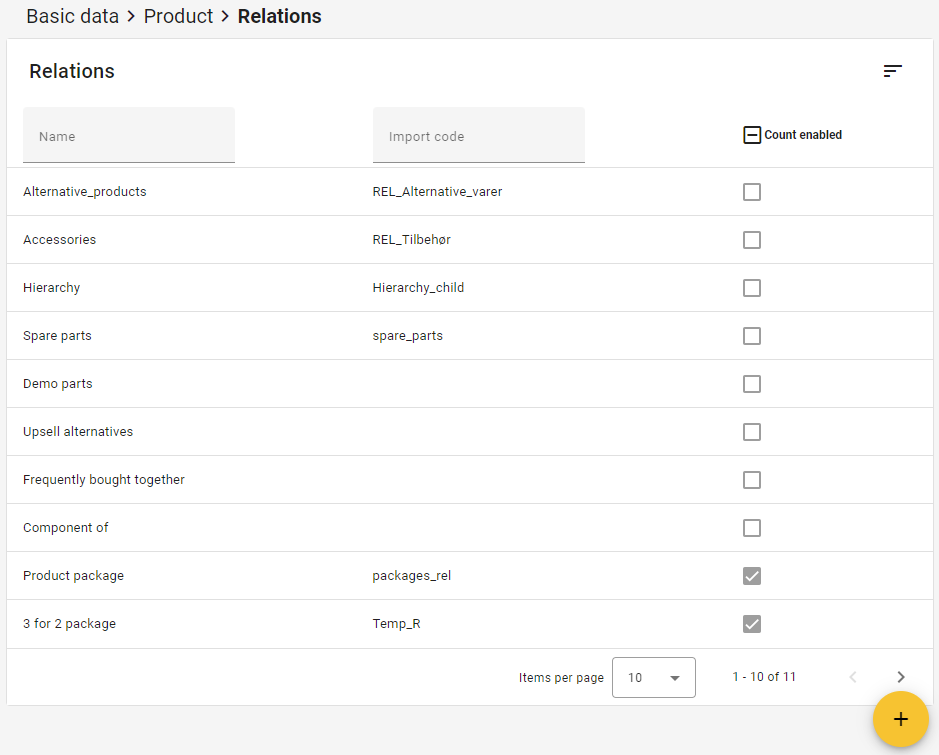
Product Relationships
Each relationship is presented as a separate tab containing a list of products related to the product.
Only relationship types that have related products are visible on a product. Even if many relationship types exist in the feed, only those that are in use will be displayed on the product.
To add a related product, you can simply press the shortcut key “r” on the keyboard, or click the three dots at the top right of the page and then select “Create relationship.”
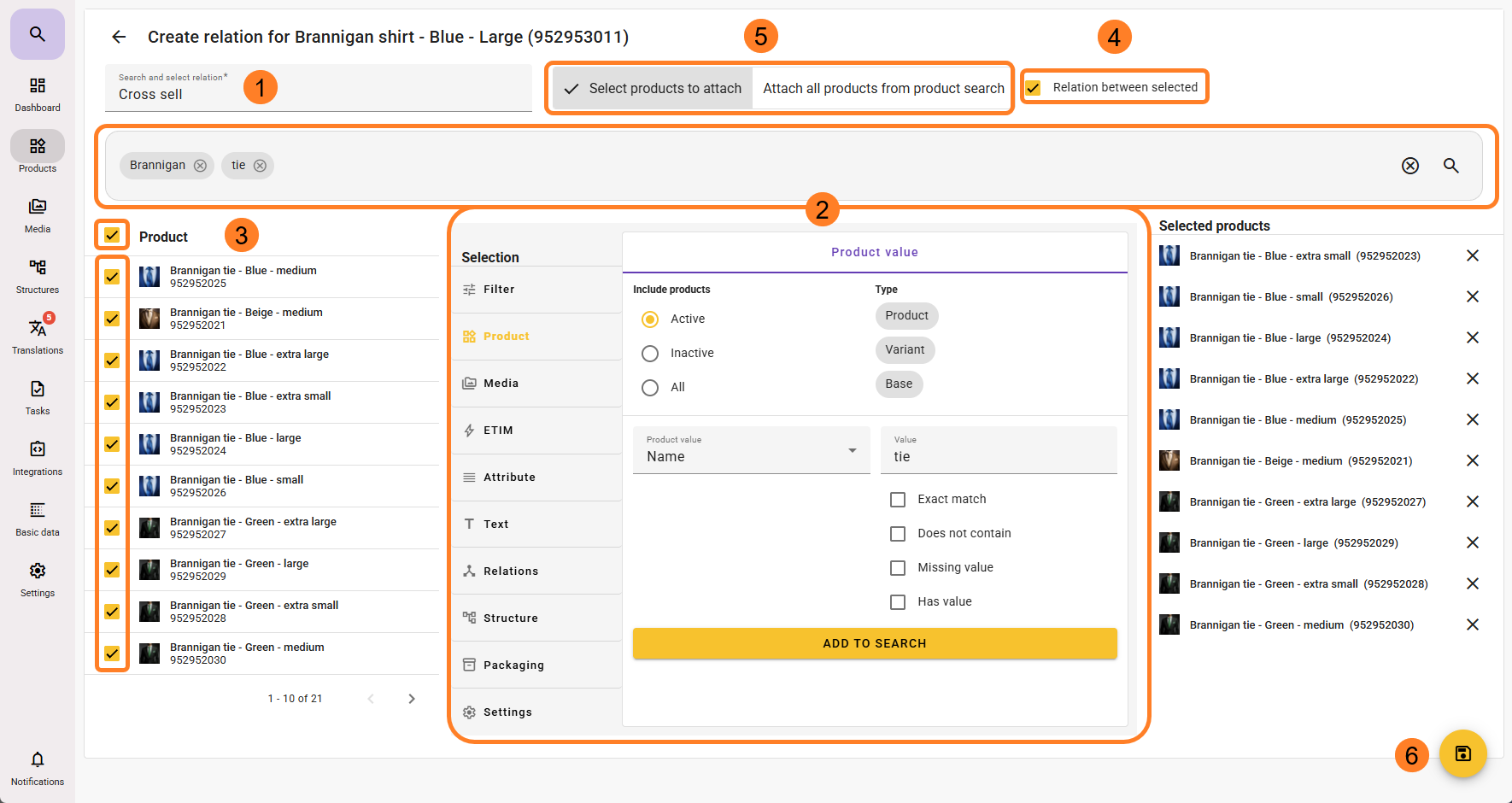
This will open a separate dialog where you can select predefined relationship types from the base data and search for the desired related products to add to the product.
Select the relationship type to be used for the products you want to add.
Search manually or use filters to select the list of products to be added.
The search results are displayed on the left-hand side. Here, you can select individual products or select all by clicking the checkbox to the left of the product.
If you want the relationship to apply in both directions, check this box.
(This may be relevant when setting up an alternative product, but not when adding a spare part. If you check this box for a spare part, the main product will be treated as a spare part for the spare part.)As an alternative to step 3, you can check “Add all products from product search.”
Click Save to activate/link the products to this relationship on the current product.
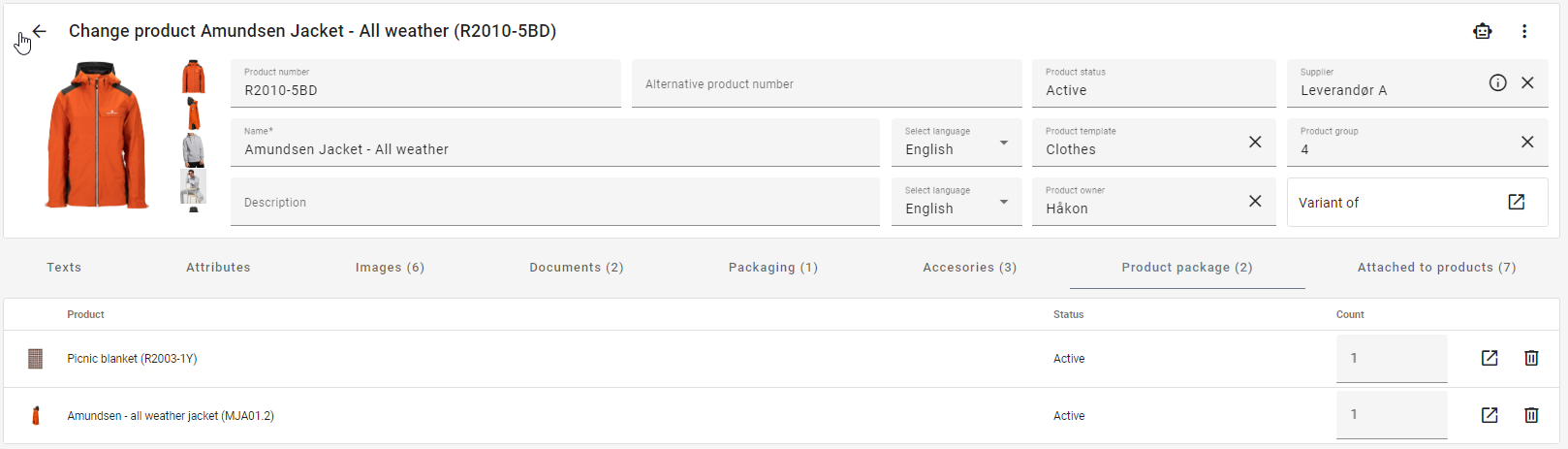
If you have checked “Quantity enabled” for a relationship, an additional “Quantity” field will be visible for the related products. This can be used for product bundles to show which products are included in a bundle and the quantity of each product.
Bulk Deletion of Relationships
If you have linked many products to a product using relationships or attached to product and want to quickly remove all related products from the relationship or attached to product, you can use the bulk delete icon located on the Relationships or attached to products tab above the related products.
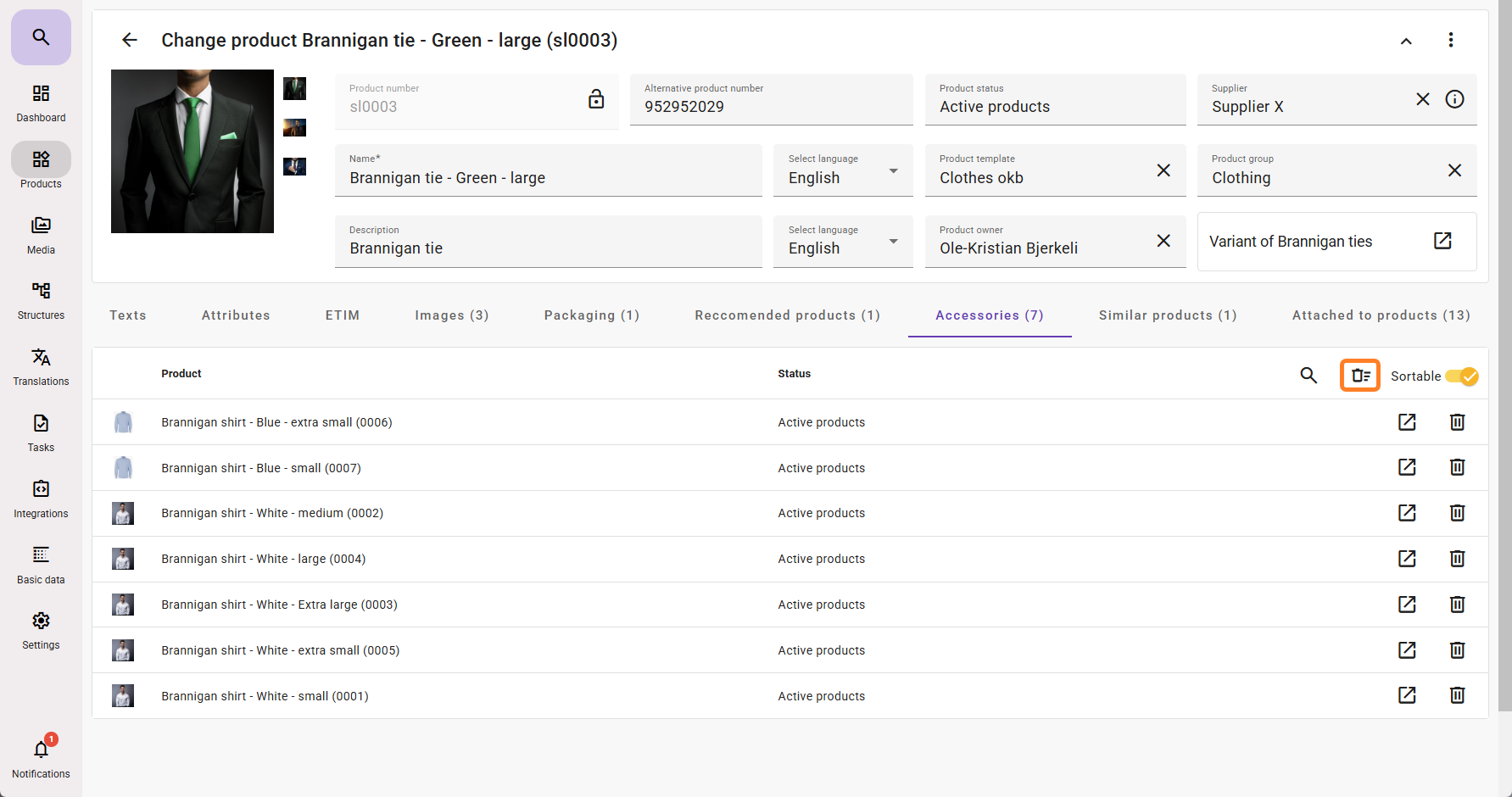
The function removes all products that have been added to the relationship.
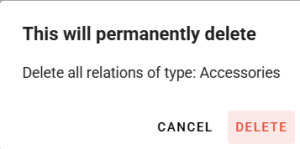
If you want to delete individual items, use the trash can icons located on each row to the right of the related products.
Attached products
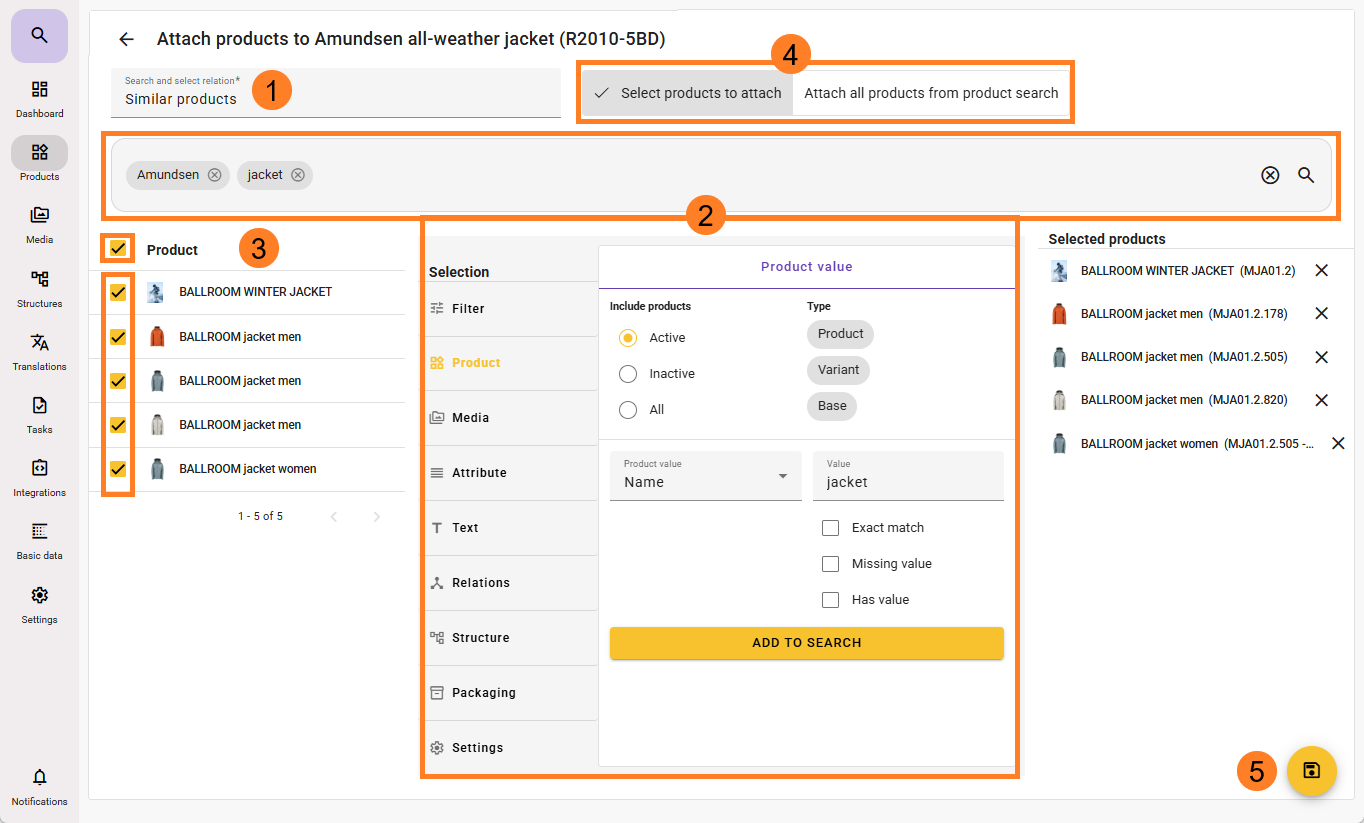
If you are on a product that is attached to other products, you will see this in a separate tab called "Attached to products". This means the products you see here have a relationship to the product you are on. If you are on a new product that should be an accessory to many other products, instead of having to go into each product and add a relationship to this product, you can quickly and easily link the product as an accessory to all desired products in one operation.
The process is similar to adding a relationship, but you select the shortcut key "x" to add a linkage, or through the "+" icon at the bottom right, choose to add linkages instead of relationships.
It is important to know the differences between attaching products and create a relation.
If you are on a spare part and use the "Attach to product" the name of the relation will not show on the spare part product. That will show on the products you attach to.
If you are on the main product and want to add spare parts to the main product, use the "Create relation". Then the name of the relation will show up as a tab on this product.
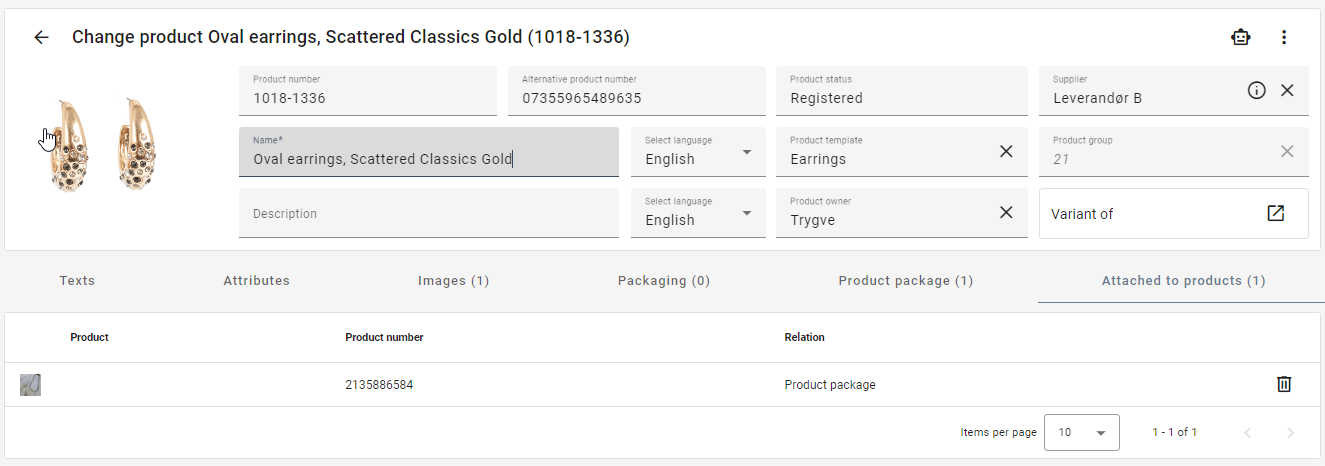
The difference between a Relationship products and Attached products is whether the product you are connecting is, for example, a spare part to the current product (relationship), or the other way around—whether the current product should be a spare part to the product it is linked to (attached to product).
This difference is also reflected in how it is displayed in the tabs on the product you are viewing.
If you are on a product where you have added a relationship, the relationship name will appear as tabs (for example, Accessories or Spare Parts).
If you are on a product and use the context menu (three dots at the upper right) and choose “Attached to products”, and select for example, spare parts), adding product this way will display the products under the tab “Attached to products.”
For integrations, you may want to display certain relationships (for example, accessories or spare parts). In that case, you use the API to export ProductRelationExportItem —not LinkedProductExportItem—in order to display the accessories or spare parts for a product.
When is it useful to create an attachment to a product?
If you are working on a new product that, for example, should be a spare part for many other products, it makes sense to create an attachment to products.
Instead of having to open each individual product and add a relationship to this product, you can quickly and easily link the product—such as a spare part—to all desired products in a single operation.
The process is similar to adding a relationship, but instead you use the shortcut key “x” to add an attachment, or click the three dots at the top right of the page and then select “Attach to products” instead of “Create relationship.”
This will open a separate dialog where you can select predefined relationship types from the base data and search for the desired related products to attach to the product.
Select the relationship type to be used for the products you want to attach.
Search manually or use filters to select the list of products to be added.
The search results are displayed on the left-hand side. Here, you can select individual products or select all by clicking the checkbox to the left of the product.
As an alternative to step 3, you can check “Add all products from product search.”
Click Save to activate/attach the products to this relationship on the current product.