
Dynamic text is a powerful tool that can combine several attributes and insert preformatted text (both language dependant and universal text. This can be useful for values you want to be used in integrations, that will simplify the integrations and also give you a visible result in feed.
Creating Dynamic texts:
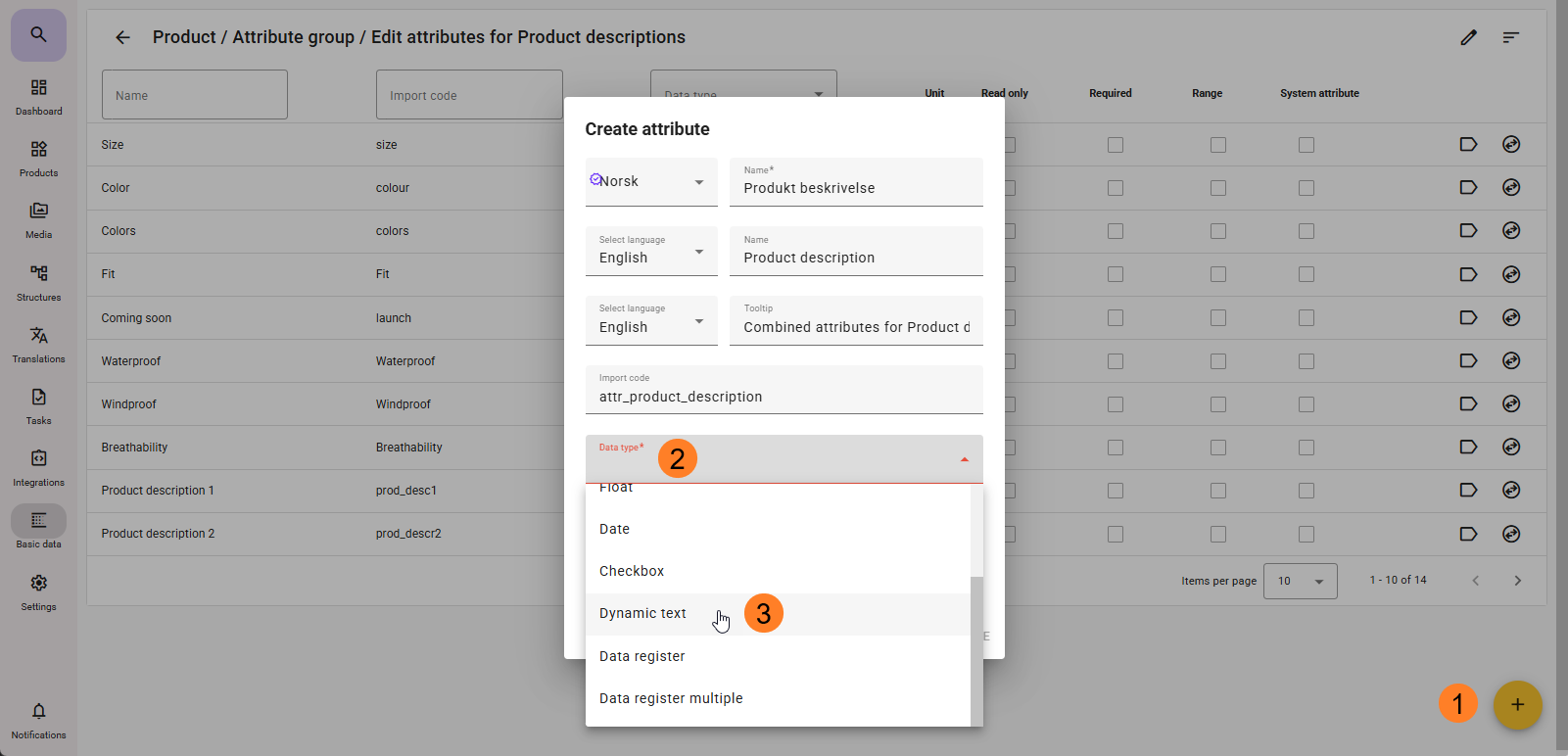
- Go to Basic data - Attributes, find an attribute group you would like to place the Dynamic text field in, and click on the round circle in the lower right to create an attribute, or press c on the keyboard.
- Type in a descriptive name. Also include an import code so a integration can fetch the field.
- Select datatype Dynamic text and click create.
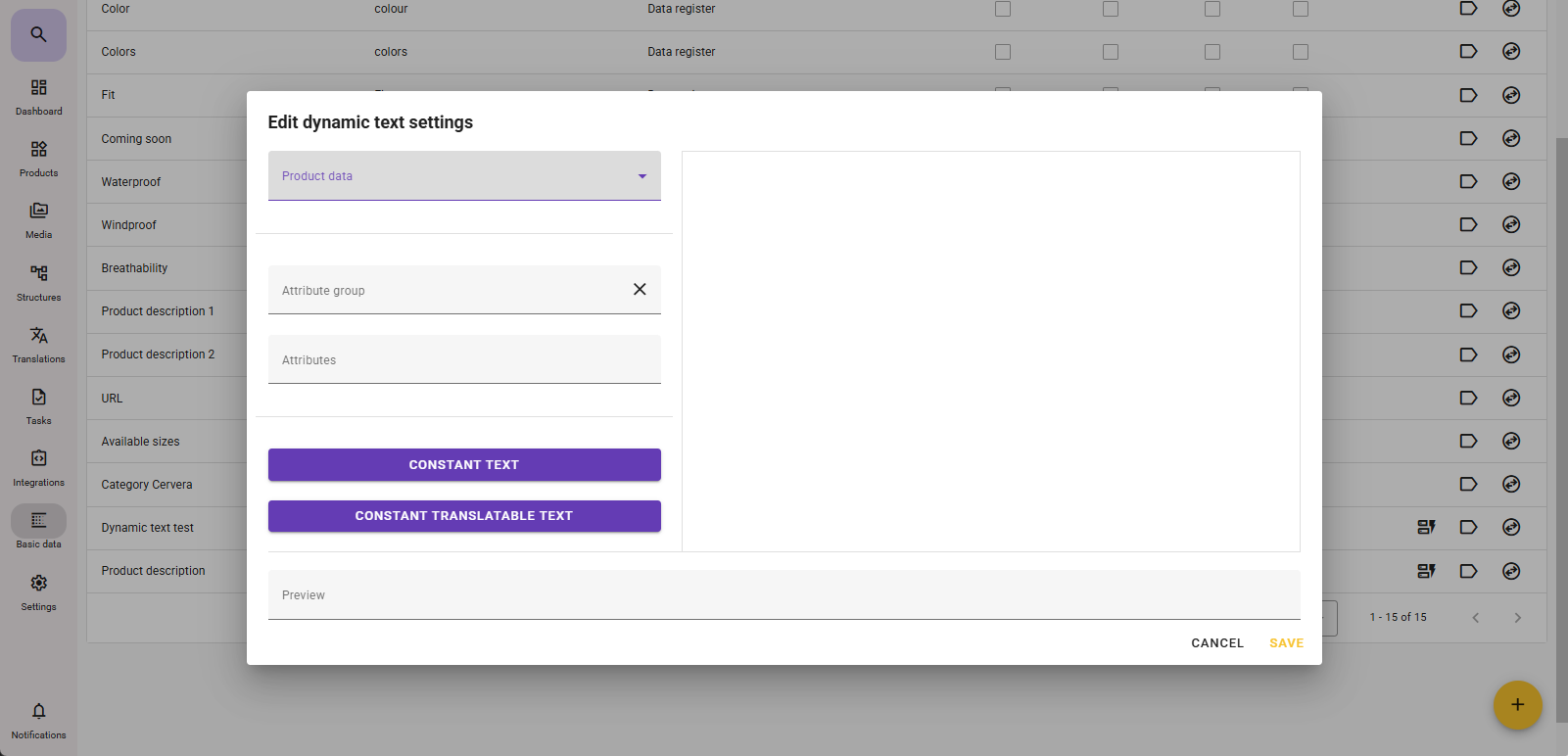
After create, a window appears where you can select Product data fields or attributes. You can also create constant text (universal text) or Constant translateable text (language dependent text).
The Constant text is useful for adding spaces or separators between attributes you add to the dynamic text. You can also use it for language independent text.
When you add attributes and constant text or Constant tranlatable text it will be added to the right side of the screen.
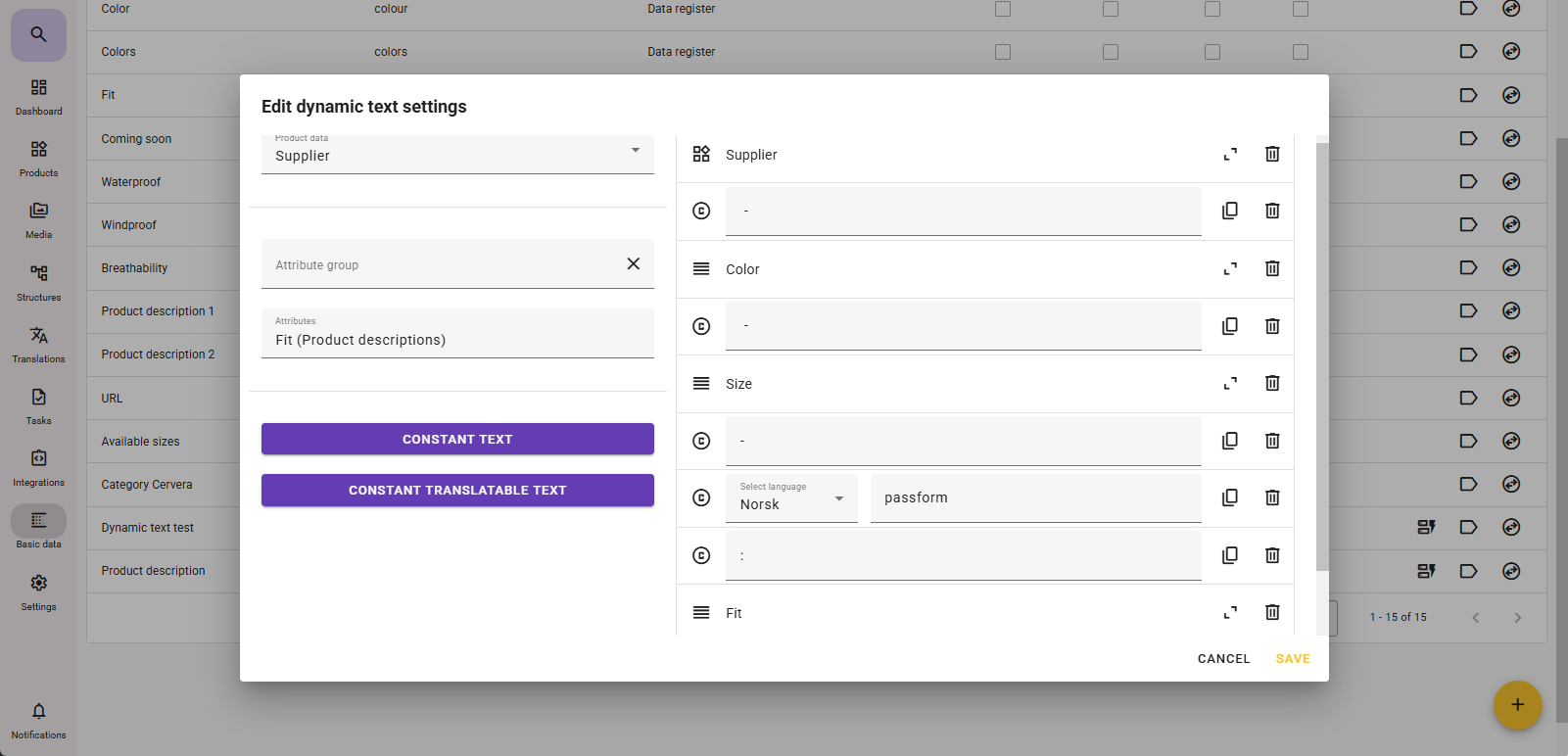
You can drag and drop the selected attributes on the right side if you need to change the order of the fields. You can also delete these by clicking on the bin if you have selected something that you don't want to be included.
Formatting of dynamic texts In the configuration dialog for dynamic texts, support has now been added for formatting both text and numbers. For text, you can choose uppercase, lowercase, or original value. For numbers, you can specify the number of decimals and whether trailing zeros should be removed. For example, if you choose 4 decimals and remove trailing zeros, 8.123456 becomes 8.1234, while 8.1200000 becomes 8.12. Click the angled brackets (<>) to the right of the mapping to view and change the formatting.